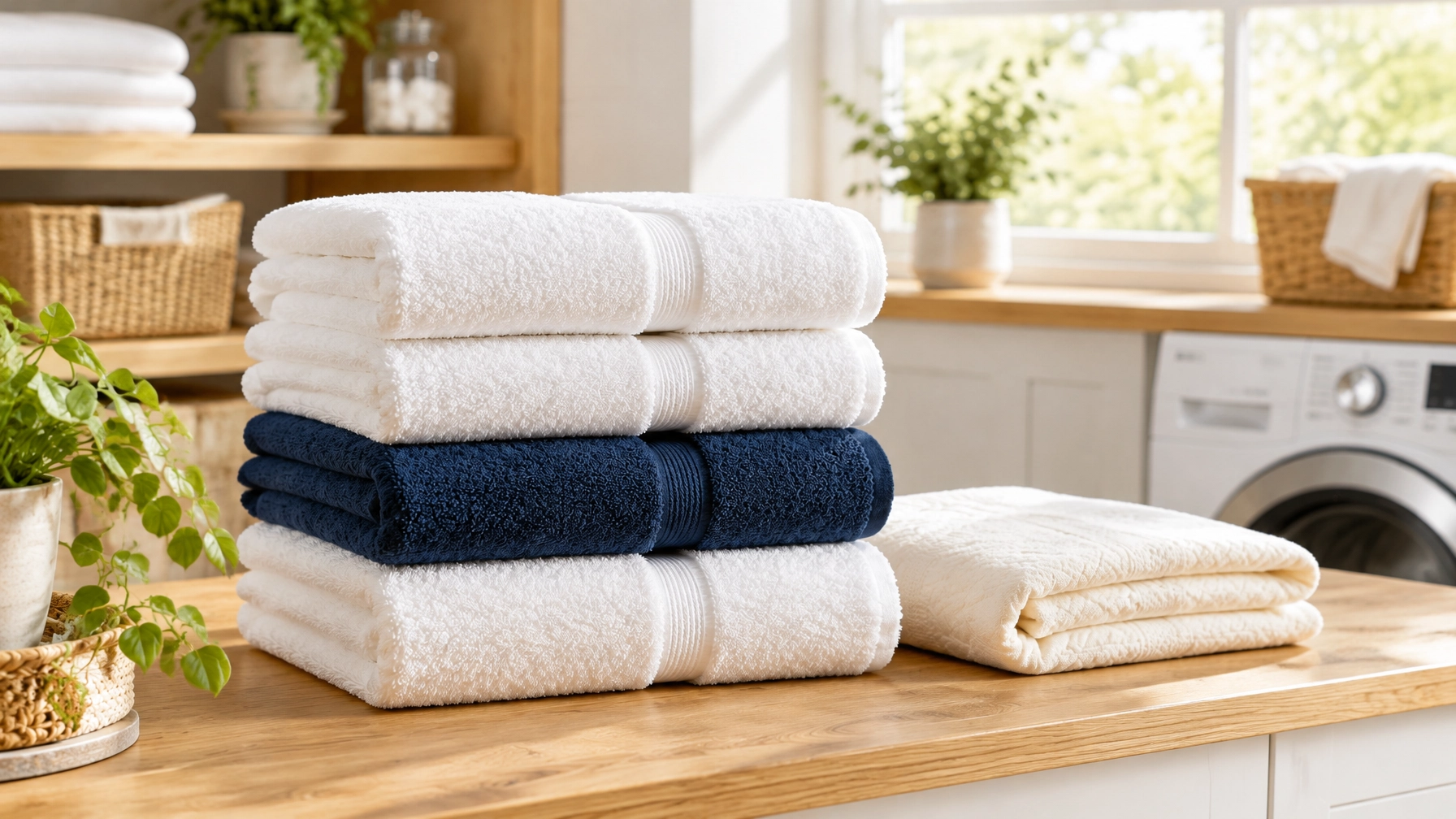
Towels work hard. They absorb water, get handled often, and can stay damp longer than other laundry. With a few simple habits, you can keep them fresh and absorbent without adding extra steps to laundry day.
Here’s how to wash towels, how often to wash each kind, and what to do when they feel stiff or smell musty.
How Often Should You Wash Towels?
A useful starting point is to wash bath towels after about three to four uses. Hang each towel fully open after use so it can dry between showers. Wash it sooner if it stays damp, smells musty, or has visible soil.
Your routine may need to change with the weather. In humid Florida conditions, towels may take longer to dry, so wash them more often if they remain damp. Wash gym towels after each workout, and wash a towel promptly if it has been used to wipe up a spill.
| Towel type | Practical schedule |
|---|---|
| Bath towels | After about 3–4 uses, or sooner if damp or smelly |
| Hand towels | Every 1–2 days in a busy bathroom; sooner if they stay damp |
| Kitchen towels | Daily or whenever they become damp, visibly soiled, or used to clean food spills |
| Guest towels | After a guest’s stay, or sooner if used heavily |
For towels used around raw meat or other food spills, wash them promptly rather than waiting for laundry day. These are general guidelines; your household’s use and the towel’s care label matter. For a wider schedule covering sheets and bedding, see our guide to how often you should wash bedding.
How to Wash Towels, Step by Step
Before washing, check the care label, especially for colored, decorative, or unusually delicate towels.
- Shake each towel out. This loosens lint and helps the fabric open up in the wash.
- Wash towels in their own load. Towels shed lint and become heavy when wet. Washing them separately from clothing helps prevent lint transfer and gives them room to move.
- Separate whites and colors. Wash white cotton towels in warm or hot water if their care labels allow it. Use cooler water for colored towels to help limit fading, and follow the label for towels with elastic or special finishes.
- Use a normal dose of detergent. Follow the detergent label for your load size and soil level. More detergent does not necessarily mean cleaner towels; leftover soap can build up in the fibers.
- Skip fabric softener and dryer sheets. They can leave a coating on towel fibers that reduces absorbency over time.
If towels feel stiff or seem to repel water, leftover detergent or softener may be part of the problem. Try a reset wash: run the towels with one cup of white vinegar and no detergent, then dry them completely. Check your washer’s manual first, and don’t mix vinegar with bleach or other cleaning products.

Why Towels Stop Feeling Soft or Absorbent
Towels can lose their comfortable feel for a few common reasons:
- Too much detergent: Residue can cling to the towel loops, making the fabric feel stiff.
- Fabric softener or dryer sheets: Their coating can interfere with the fibers’ ability to absorb water.
- An overloaded washer: Crowded towels may not wash or rinse evenly.
- A damp towel left too long: Moisture can lead to a lingering musty smell.
For a simple reset, wash a load of towels without detergent using one cup of white vinegar, then dry them fully. If the smell or stiffness remains, rewash them with a regular detergent dose and make sure the washer isn’t crowded. Use products only as directed and follow appliance and fabric-care instructions.
What to Do About a Mildew Smell
That sour, musty smell often starts when a towel stays damp in a heap, on the bathroom floor, or inside the washer after a cycle. Hanging it open between uses and moving washed towels promptly to the dryer can help prevent the smell from returning.
If a towel already smells musty, wash it again rather than folding it away. Use the warmest water the care label allows and a normal detergent dose. Don’t add fabric softener, and dry the towel completely before storing it. If you use the vinegar reset, run it separately from any bleach or other cleaning products.

How to Dry Towels So They Stay Fluffy
After washing, give each towel a shake to loosen the loops. Tumble dry on low to medium heat, following the care label. Dryer balls can help separate towels as they tumble; air drying is another option if the towels can hang with room around them.
Avoid packing the dryer too full. Towels need space to move and dry evenly. Before folding, check that the thick hems and corners are dry, too. Put towels away only when they’re fully dry, since moisture left in a folded stack can bring back a musty smell.

How to Keep White Towels White
Wash white towels with other whites, and check the care label before choosing a warmer wash. Use the recommended amount of detergent; excess soap can leave a dulling residue. Avoid fabric softener and dryer sheets, which may coat the fibers.
If your towels need extra help, a laundry product made for whites, such as oxygen bleach, may be an option when the product label and towel care instructions allow it. Avoid assuming that chlorine bleach is suitable for every towel. For a deeper look at towel routines, the Cleveland Clinic’s towel-care advice is also useful.
When Your Towel Load Is Ready to Hand Off
Sometimes the towels are only part of the hamper. If you’d rather not sort, wash, dry, and fold the whole household load, we can pick up everyday towels and machine-washable laundry from your home and return it neatly folded. Our wash-and-fold service guide explains what the service includes.
Standard laundry, including everyday towels, is $2.50 per pound with a $37.50 minimum per order. Pickup and delivery are complimentary. You don’t weigh anything at home: we weigh your laundry after pickup and send you the total for approval before processing. Bulky items such as comforters, quilts, and blankets are priced individually by size.
You can choose from four detergent options, including fragrance-free choices for sensitive skin. Stain treatment is available on request, and you can provide hangers for selected items you’d like returned on them. Pet-friendly homes are welcome, though items primarily used by pets are not accepted.
Pickup requests are confirmed by our team; submitting a request does not book a pickup instantly. Once your pickup is confirmed, please have your laundry ready by 9:00 AM that day. Most orders are returned within 24–48 hours after approval and payment. For local details, read our guide to laundry pickup and delivery in Minneola. You can also see how laundry service pricing works.
Towels that are worn thin or no longer absorb well can still be useful as cleaning rags. For the towels you’re keeping, a moderate detergent dose, an uncrowded wash, and thorough drying go a long way toward keeping them fresh and comfortable.
Leave a Reply